
iPhone 18 Pro vs iPhone Duo: Apple Put the Better Camera in the Cheaper Phone
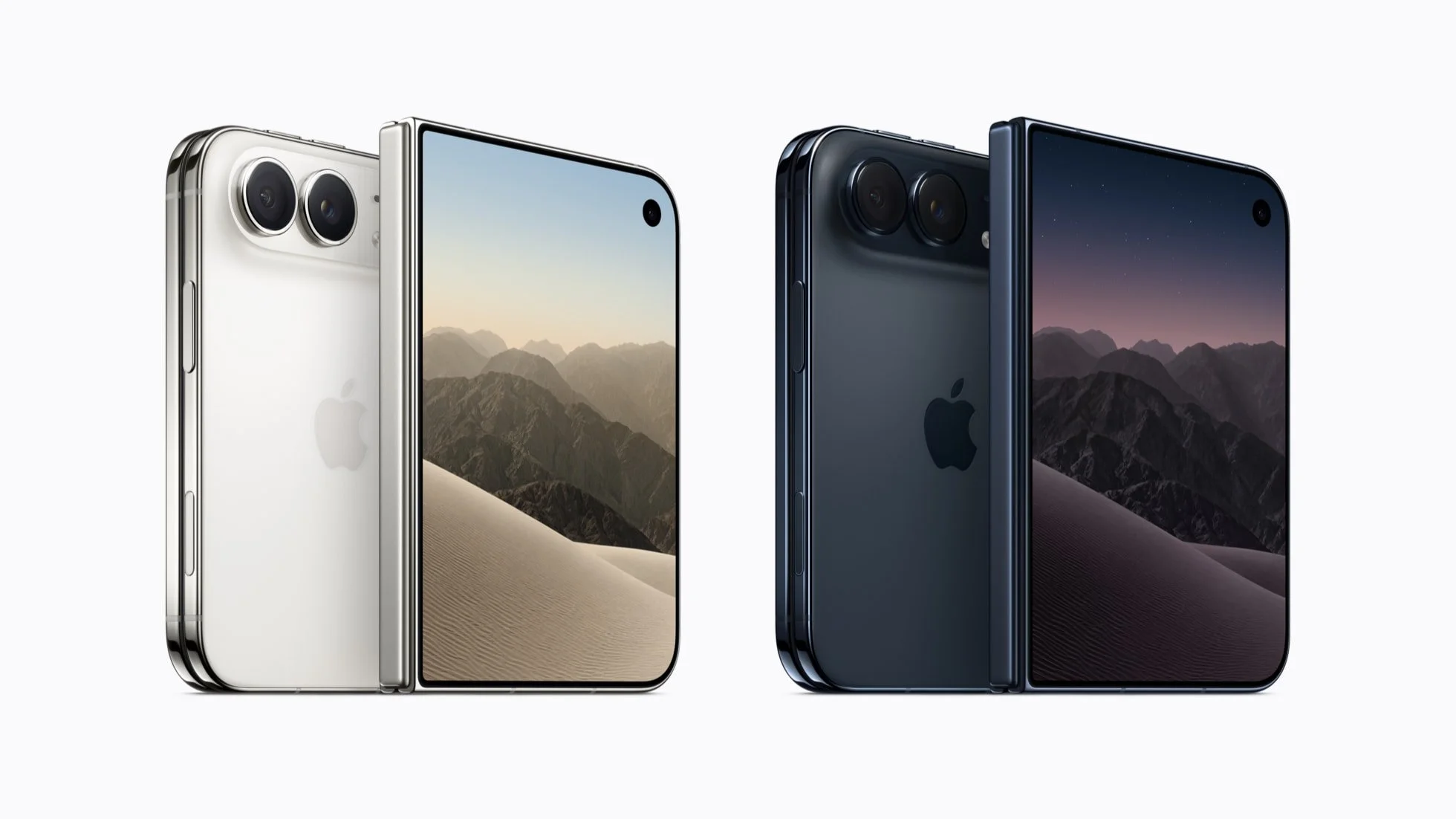
Apple announced both phones on September 9, 2026. The iPhone 18 Pro starts at $1,199. The iPhone Duo, Apple's first foldable, starts at $1,999. The $800 you spend to move up gets you a bigger screen and takes away a lens.
I shoot commercially for a living, so that is the part of this launch I keep coming back to. Almost every iPhone 18 Pro vs iPhone Duo comparison you read today will lead with the fold. I want to lead with what Apple actually moved, what it quietly left out, and which of these two phones is the better camera to carry for the next three years.
The Short Answer
The iPhone 18 Pro is the better camera and the better value. The iPhone Duo is the better computer.
If you buy phones for photography or video, buy the 18 Pro. It has the three-lens system, the new variable aperture, the 100mm telephoto, and the professional video formats. It costs $800 less and ships five weeks earlier.
If you buy the Duo, buy it for the 7.6-inch inner screen and Split View multitasking, and accept that you are paying flagship-plus money for a two-lens camera.
That is the whole decision. Everything below is the evidence.
iPhone 18 Pro vs iPhone Duo: The Specs That Decide It
The Camera Gap Is Bigger Than the Spec Sheet Admits
Apple built the most interesting iPhone camera in years this cycle, then did not put it in the $1,999 phone.
The iPhone 18 Pro has a real telephoto lens. The iPhone Duo has none.
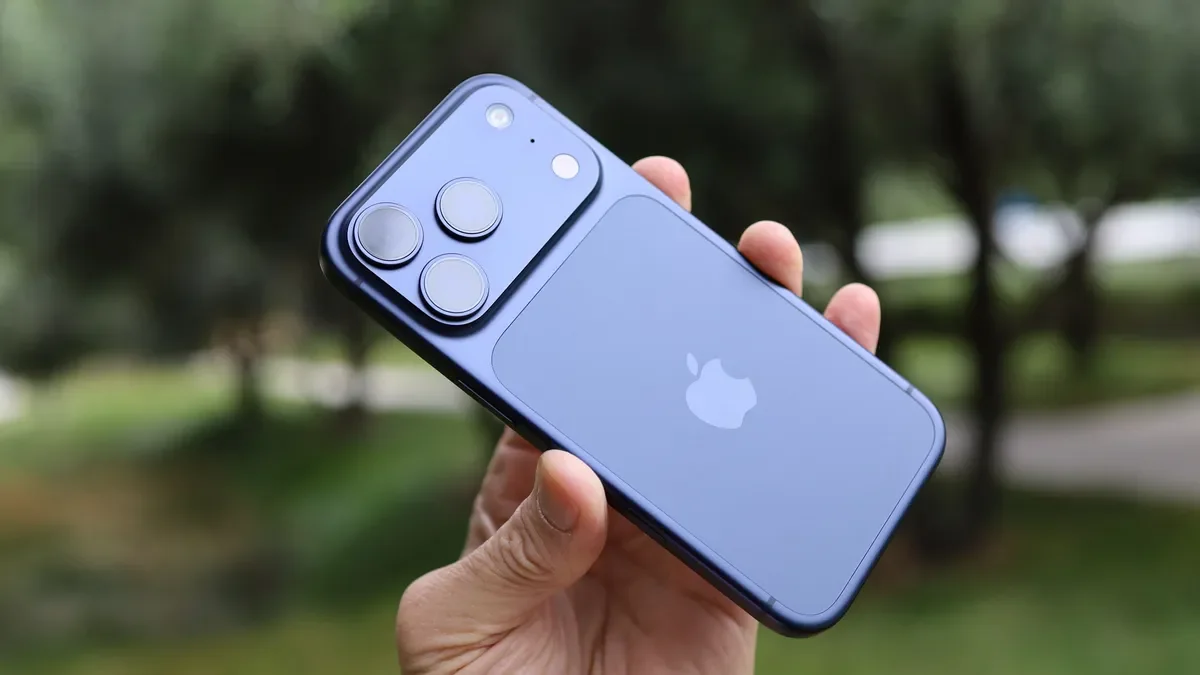
This is the sentence most coverage is burying, so I will put it plainly. The iPhone Duo has two rear lenses. Its 2x setting is a crop from the middle of the main sensor, which is why Apple calls it an optical-quality 2x telephoto instead of optical zoom. There is no third lens behind it.
The iPhone 18 Pro has a 48MP Fusion Telephoto at 100mm, f/2.8, built around a tetraprism with 3D sensor-shift stabilization. Apple then crops that 48MP sensor to produce a 12MP 200mm frame it labels 8x optical-quality.
Read Apple's own wording carefully and the iPhone 18 Pro zoom ladder breaks down like this:
- 0.5x, 13 mm: a lens
- 1x, 24 mm: a lens
- 2x, 48 mm: a 12MP crop
- 4x, 100 mm: a lens
- 8x, 200 mm: a 12MP crop
Three lenses, two crops. Apple's 16x optical-quality zoom range is the span from 0.5x to 8x, not a 16x zoom.
I am not knocking the crops. A 12MP file off a 48MP sensor at 200mm is genuinely useful, and I would shoot it. The point is that the iPhone Duo has only the first crop and none of the reach. If you photograph people, product details, sports, or anything you cannot walk up to, the 18 Pro is not slightly better. It is a different tool. Reach is the entire reason a long lens lives in my bag on every automotive photography job I shoot.
What variable aperture actually changes
The iPhone 18 Pro main camera is the first iPhone with a mechanical iris. Six laser-cut blades move the aperture between f/1.48 and f/4.0 across four stops.
Every iPhone before this faked depth of field with software after the shutter fired, or lived at one fixed aperture. This one moves real blades.
Two things follow from that, and only one of them gets talked about.
Wide open at f/1.48, it gathers more light than any iPhone main camera before it. That is the headline.
Stopped down is the part I care about more. At f/4.0 you get depth of field from the optics instead of from an algorithm guessing where the edge of someone's hair is. Anyone who has watched Portrait mode chew through a curl of hair, a pair of glasses, or the gap between two people standing at slightly different distances knows exactly why that matters. Three people around a table at f/4.0 are actually all in focus. That is not a computational estimate, it is physics. It is the same reason aperture choice is a deliberate decision on every product photography setup I light.
Apple also added Pro controls to the Camera app: aperture, shutter speed, white balance, and a live histogram. I have carried a third-party camera app on my phone for years specifically to get those. Now they are native.
The iPhone Duo does not get the variable aperture. Its main camera has a fixed aperture.
The pro video pipeline is not on the foldable either
Apple's published iPhone 18 Pro specifications list ProRes, ProRes RAW, Apple Log 2, Academy Color Encoding System, Genlock, and ProRes up to 4K 120 fps with external recording.
Apple's iPhone Duo announcement lists none of those. It lists 4K Dolby Vision up to 120 fps on the main camera, Cinematic effects applied after capture at up to 60 fps, an upgraded Audio Mix that can isolate music, and 4K Dolby Vision time-lapse.
That is a good phone camera. It is not a production camera. If you deliver work that has to sit in a color pipeline next to real cinema bodies, or you need Genlock to sync to another camera, the 18 Pro is the only one of these two that shows up. For anyone producing commercial video, that gap is the entire argument.
The iPhone Duo camera tricks are real, and they are not a substitute
I want to be fair here, because the Duo does things no other iPhone can do, and they come directly from having two screens.
- Rear-camera selfies: shoot with the better rear cameras and frame on the outer display. Your selfie camera is now your best camera.
- Duo Preview: the subject sees their own framing on the outer screen while you shoot. Anyone who has directed a nervous subject knows how much time that saves.
- Smart Take: on-device models fire the shutter when people are actually posing, so the person holding the phone stops being the person missing from the photo.
- Kid Cue: Peanuts animations play on the outer screen to get a child to look at the lens.
- Duo FaceTime: someone standing next to you joins the call on the outer display.
- Built-in tripod: prop it open on a table for hands-free time-lapse and FaceTime.
Those are thoughtful, and several of them solve problems I actually have on set. If your work is fast social capture or UGC content, the Duo's second screen is a genuine production advantage. None of it is a 100mm lens.
Displays: One Great Screen Against Two Different Ones
The iPhone 18 Pro is a 6.3-inch Super Retina XDR panel with ProMotion, Always-On, and 3,000 nits of peak outdoor brightness.
The iPhone Duo runs two panels that share an aspect ratio, so content scales instead of jumping when you open it. The 5.4-inch outer display delivers what Apple calls 90 percent of the 18 Pro's screen area in a body roughly the size of a passport. The 7.6-inch inner display is 50 percent larger than the 18 Pro Max. Apple's own footnote measures those as 5.36 inches and 7.58 inches as true rectangles. Both get ProMotion, Always-On, and 3,000 nits.
The inner panel is the first iPhone display with a nano-texture finish. Apple uses it to cut glare and hide the crease, with a custom polymer cover layer it rates up to 40 percent stiffer than the industry norm. Under that panel sits a FaceTime camera that disappears when it is not in use.
For reviewing images on location, a 7.6-inch matte display is a meaningfully better client-facing screen than a 6.3-inch glossy one. That is the one place the Duo beats the Pro at a job I actually do.
Build: Titanium, a 100-Part Hinge, and the Question Nobody Can Answer Yet
The iPhone Duo is grade 5 titanium, mirror-polished, with a 3D-printed hinge cover made from 100 percent recycled titanium. The hinge is engineered from more than 100 components. Ceramic Shield 2 covers the outer front, Ceramic Shield covers the back, and a titanium plate sits under the inner display. High-strength glass sits above and below the folding panel with adhesives designed to let the layers slide past each other like pages.
Both phones are IP68, rated to 6 meters for 30 minutes.
Apple has clearly engineered this hard. It is still a first-generation folding product, and no amount of press-release language settles how a hinge and a crease look after eighteen months in a pocket. Independent durability testing had not landed when I wrote this. I would wait for it before spending $1,999.
Same Chip, Different Thermal Problem
Both phones run the A20 Pro, Apple's first 2nm iPhone chip: a 6-core CPU up to 20 percent faster than the A19 Pro, a 7-core GPU up to 40 percent faster, a Dual 16-core Neural Engine with twice the compute, and 50 percent more memory bandwidth.
Apple rates the Duo at up to 35 percent better sustained performance than the iPhone 17 Pro, using a custom vapor chamber and an M-series-style chip package bonded straight to it. The 18 Pro gets its own redesigned vapor chamber with roughly three times the surface area of the 17 Pro's.
Day to day, these will feel identical. The difference is not how fast Safari loads. It is what the software does with the second screen.
Battery: The Foldable Wins Closed and Loses Open
- iPhone 18 Pro: up to 36 hours of video playback
- iPhone 18 Pro Max: up to 45 hours
- iPhone Duo, outer display: up to 44 hours
- iPhone Duo, inner display: up to 31 hours
- iPhone Duo, both used equally: about 24 hours of usage per charge
That 24-hour mixed-use number is the honest one to plan around, and it is the one buried under the two flattering figures above it. The Duo carries one battery per side and treats them as a single cell.
Both charge to 50 percent in about 20 minutes wired, or about 30 minutes on MagSafe or Qi2.
Software: iOS 27 Is Not the Same OS on These Two Phones
Both run iOS 27 with Apple Intelligence and Siri AI. The Duo ships on iOS 27.1.
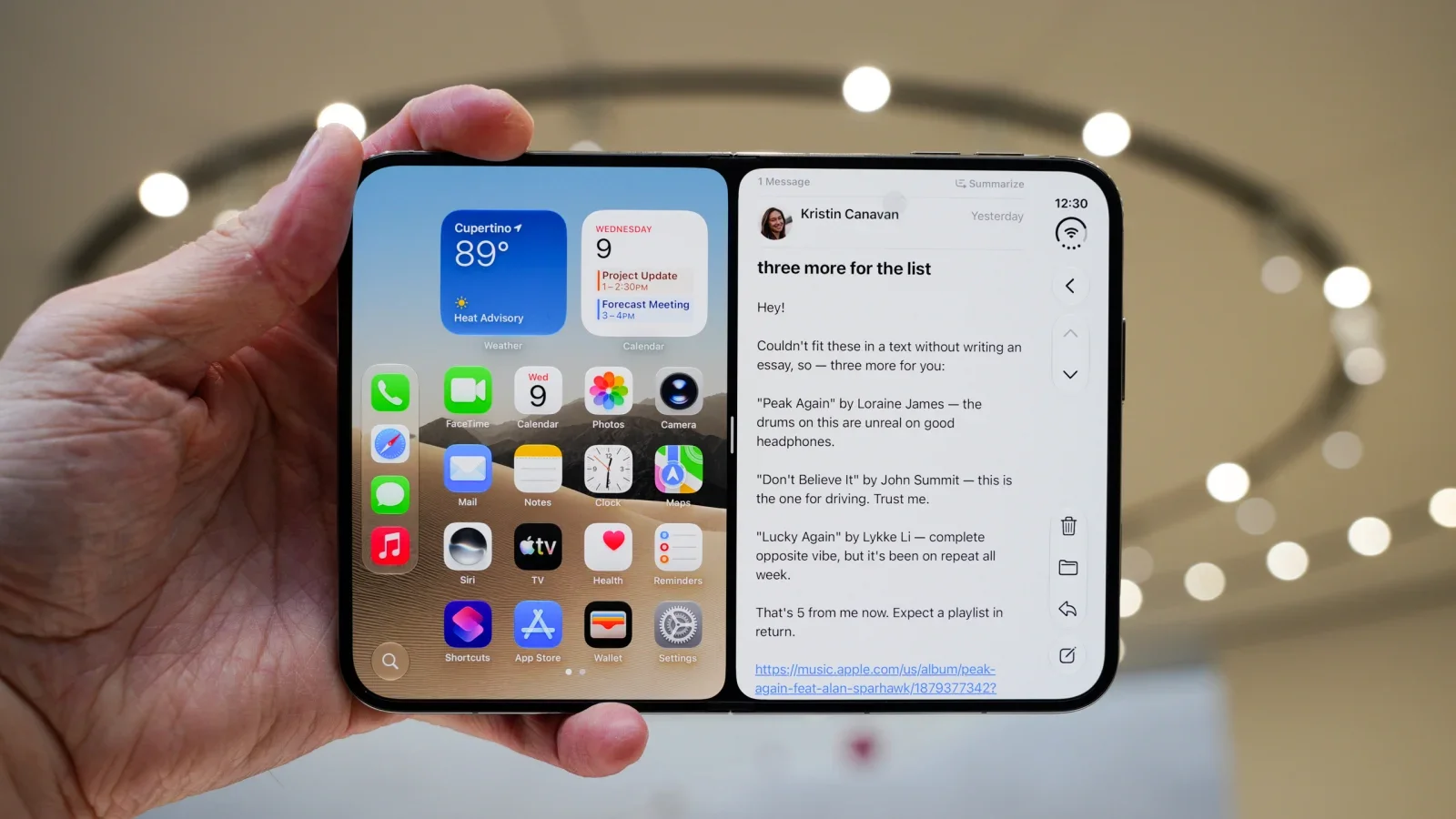
Opened, the Duo does things no iPhone has done before.
- Split View: two apps side by side, or two windows of one app. A first on iPhone.
- App pairs: save a layout and come back to it.
- Two Home Screen pages: with a vertically scrolling Today View on the left.
- Side-mounted controls: Lock Screen controls, the Dock, and app navigation move to the side to protect vertical space.
- Vertical Dynamic Island: redesigned to run along the side of both displays.
- Adaptive layout: content reflows as you fold, turn, or flip the device.
- StandBy: works on either display, even off the charger.
- Apple Pencil with USB-C: arriving later this year, on both screens. No other iPhone supports a Pencil.
Netflix, Zoom, and Slack shipped foldable-aware versions at launch.
The iPhone 18 Pro keeps Face ID, the classic one-handed layout, and the new Pro camera interface. It does not get Split View.
One regional note that matters: Siri AI is not available in the EU on iOS at launch.
Price, Storage, and Dates
- iPhone 18 Pro: $1,199, 256GB to 2TB, pre-order September 12, in stores September 18
- iPhone 18 Pro Max: $1,299, 256GB to 2TB, same dates
- iPhone Duo: $1,999, 256GB to 2TB, pre-order October 16, in stores October 23
The Duo launches in more than 70 countries on October 23 and in 28 more on October 30. Apple also sells a $79 iPhone Duo Case and a $129 iPhone Duo Folio with a kickstand.
Worth noting: the iPhone 18 Pro Max is $700 less than the Duo, has the same Pro camera system as the 18 Pro, the longest battery in the lineup at 45 hours, and a 6.9-inch screen. If your real complaint is that your phone screen is too small, that is the cheaper answer and it ships first.
Accessories Worth Having on Day One
Both phones charge to 50 percent in about 20 minutes, but only with a 60W-capable USB-C cable and adapter, which Apple does not include. That is the one purchase I would not skip. A MagSafe or Qi2 puck, a case, and a decent cable cover most of it. If you are ordering this week, here are the iPhone 18 Pro accessories I would look at first.
The Duo is a different problem. A folding phone with a nano-texture inner panel and a hinge does not take a standard case, and third-party options will be thin at launch. Apple's own Folio with the kickstand is the obvious starting point given how much of the Duo's appeal depends on propping it open, and current iPhone Duo accessories are worth checking before the October 23 ship date.
Who Should Buy Which
Buy the iPhone 18 Pro if you shoot
Variable aperture, a 100mm lens, 8x reach, ProRes RAW, Apple Log 2, and Genlock are not on the other phone at any price. Add Face ID, a lighter body, $800 saved, and a September 18 ship date.
Buy the iPhone Duo if the screen is the product
You want a 7.6-inch canvas for mail, documents, video, and two apps at once. You want Apple Pencil on a phone. You want a compact closed device that becomes a small tablet. You are comfortable being an early owner of a folding product and you can wait until late October.
Buy the iPhone 18 Pro Max if you just want a bigger screen
The biggest display without the fold, the longest battery, and the same cameras as the 18 Pro, for $700 less than the Duo.
What This Means If You Hire a Photographer
Every year the phone gets better and every year the same question comes up. Can a client just shoot it on an iPhone?
For some things, honestly, yes. A quick social post, a behind-the-scenes clip, an internal reference photo. Phones are genuinely good now and pretending otherwise is not useful to anyone.
What a phone still cannot do is control light. Every image I make for a client is built on lighting decisions, lens choices, and camera position that a phone has no access to regardless of what its sensor can resolve. Variable aperture is a real step toward a phone behaving more like a camera. It is not a step toward a phone behaving like a photographer.
If you want to see the difference in practice, my commercial photography portfolio and my current gear list both show what actually goes into the work. I shoot commercial and industrial photography, restaurant and food photography, and drone photography and video out of Pittsburgh, and I take shipped product work from anywhere.
Need Images a Phone Cannot Make?
I shoot commercial photography and video for brands, restaurants, manufacturers, and product companies. Controlled lighting, real lenses, and images built for how you actually use them. Book a project in Pittsburgh or ship your product in.
Start a ProjectBottom Line
The iPhone 18 Pro is the better phone in the old sense: lighter, cheaper, sharper reach, mechanical aperture, Face ID, earlier ship date.
The iPhone Duo is the more interesting object. It is the first genuinely new iPhone shape in almost twenty years, and the software work Apple did for it is real. If I carried a phone mainly to read, answer email, and run two things at once, I would want one.
But Apple asked $800 for a bigger screen and charged a lens for it. For anyone who buys a phone to take pictures, that is the wrong trade.
Apple's marketing calls the Duo the most transformational change to iPhone since the original. As a shape, that is fair. As a camera, the cheaper phone won this year.
FAQ: iPhone 18 Pro vs iPhone Duo
Does the iPhone Duo have a telephoto camera?
No. The iPhone Duo has two rear lenses, a 48MP Fusion Main and a 48MP Fusion Ultra Wide. Its 2x setting is a crop from the main sensor, which Apple describes as an optical-quality 2x telephoto rather than optical zoom. The iPhone 18 Pro has a dedicated 48MP 100mm telephoto lens.
Which has the better camera, the iPhone 18 Pro or the iPhone Duo?
The iPhone 18 Pro. It has three rear lenses to the Duo's two, a variable aperture that moves from f/1.48 to f/4.0, a 100mm telephoto with an 8x optical-quality crop, and Apple's professional video formats. The Duo shares the same 48MP Ultra Wide and adds camera features built around its second screen, but it has no telephoto lens and a fixed aperture.
Can the iPhone Duo shoot ProRes RAW or Apple Log 2?
Apple's iPhone Duo announcement does not list ProRes, ProRes RAW, Apple Log 2, ACES, or Genlock. Those formats appear on the iPhone 18 Pro. The Duo records 4K Dolby Vision up to 120 fps.
Does the iPhone Duo have Face ID?
No. The iPhone Duo uses Touch ID built into the side button, and it can also be unlocked with an Apple Watch. The iPhone 18 Pro uses Face ID.
When can I buy the iPhone Duo?
Pre-orders open Friday, October 16, 2026, with availability on Friday, October 23 in more than 70 countries, and October 30 in 28 more. The iPhone 18 Pro pre-ordered September 12 and ships September 18.
Is the iPhone Duo worth $800 more than the iPhone 18 Pro?
It depends on what you buy a phone to do. The $800 buys a 7.6-inch inner display, Split View multitasking, Apple Pencil support, and a titanium foldable body. It costs you a telephoto lens, variable aperture, the professional video pipeline, and Face ID. For photography and video, the 18 Pro is the better buy. For reading, documents, and multitasking, the Duo is.
How long does the iPhone Duo battery last?
Apple rates it at up to 44 hours of video playback on the outer display, up to 31 hours on the inner display, and about 24 hours of usage per charge when both displays are used equally. The iPhone 18 Pro is rated at up to 36 hours of video playback.
Which iPhone is best for photography in 2026?
The iPhone 18 Pro or iPhone 18 Pro Max. Both carry the same three-lens system with the variable aperture main camera, the 100mm telephoto, and the full professional video pipeline. The iPhone Duo is a capable two-lens phone, but it is not the better photography tool at any price in this lineup.
Specifications and pricing in this article are U.S. launch figures taken from Apple's September 9, 2026 announcements and Apple's published iPhone 18 Pro technical specifications, verified September 13, 2026. Independent camera, battery, and durability testing had not been published at the time of writing. Regional availability and pricing vary.
I write about camera gear the same way I use it, which is honestly. If this was useful, my iPhone 18 Pro camera breakdown for photographers and creators goes deeper on the variable aperture, my iPhone 17 Pro vs iPhone 18 Pro camera comparison covers the upgrade question, my iPhone 16 Pro vs iPhone 17 Pro camera comparison covers the generation before that, and my Tamron 35-100 vs 35-150 comparison covers the lenses I actually shoot with every week.
I'm Ian Jones, a Pittsburgh commercial photographer and videographer serving Pittsburgh and Western PA, with shipped product work for brands anywhere. See what I do, read client reviews, or start a project.