AN ORIGINAL SERIES

LESTER & ETHEL

A retro-style comedy series set in today's world — shot like a classic 70s sitcom

CREATED, WRITTEN, AND DIRECTED BY IAN JONES

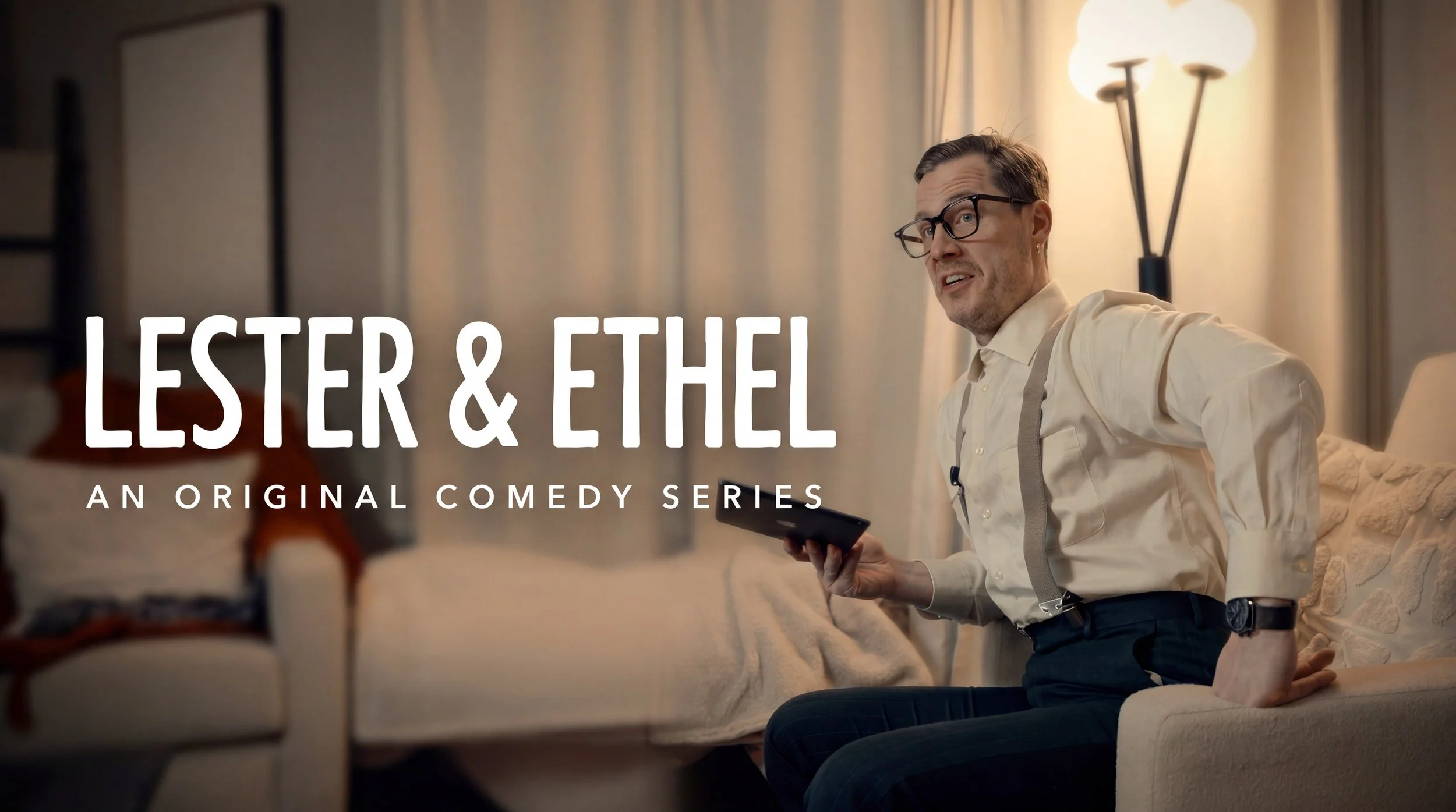
Lester & Ethel — an original retro comedy series created by Ian Jones. A man in glasses and suspenders sits in a warmly lit living room holding a tablet, with the series title in bold white text to his left.


Lester Was Supposed to Be a One-Off…

In April 2025, I shot a 78-second April Fools sketch — a 70-year-old boomer losing his mind over fake internet headlines. It was supposed to be a throwaway bit. Post it, get a laugh, move on.

Instead, the character stuck.

The voice. The posture. The way he hated everything modern without quite understanding it. So I kept writing him. Six episodes later, Lester & Ethel is a real series with its own rhythm and visual language: 70s-sitcom bones, modern-day absurdities, and a 70-year-old man who refuses to stop complaining about any of it.

This page is the story of how a one-off character became an ongoing original series — shot, written, directed, and produced entirely in-house at ISJDESIGNS.


The Series

Six episodes. One grumpy old man. A lot of modern things for him to be mad about.

Episode 1 — The Internet Lied to Me The one that started it all. Lester falls for every April Fools prank on the internet and declares war on Facebook, Sour Patch Kids, and McDonald's.

Episode 2 — Cracker Barrel Lester is losing his mind over the construction near his house. Traffic. Noise. Trucks. Then he finds out what they're actually building.

Episode 3 — One For Each of Ya A quiet day at home turns into a heartfelt tribute when Lester hears the news about Val Kilmer. What starts as grief ends as a love letter to Tombstone.

Episode 4 — Woke White Lester goes to see the 2025 Snow White remake. His blood pressure never recovers.

Episode 5 — Soup's On Ethel's gone for bingo night. Lester is alone with Campbell's limited-edition Grilled Cheese and Tomato Soup and far too much confidence. It does not go well.

Episode 6 — The Logo That Broke America Cracker Barrel changes their logo. Lester loses his mind. The same man who wept with joy when they built one down the street now declares war on corporate America. Dramatic, theatrical, and with a twist at the end.

How It's Made

Every episode of Lester & Ethel is shot, written, directed, edited, and produced by me. No crew. No studio. No co-star. Just two cameras, a room, and a character I refuse to let go of.

Here's the trick: Ethel doesn't exist. Not on camera. Not off camera. Not as a voice track. Not as a second actor behind the lens. When I'm shooting Lester yelling at Ethel in the next room, I'm yelling at an empty house. Every pause is me listening to nothing. Every reaction is to air.

The audience builds her anyway. That's the whole point. Lester's performance, the timing, the writing, the edit — they add up to a wife you absolutely believe is standing just off frame. She's real because Lester acts like she's real.

It's the oldest sitcom move in the book. Niles had Maris. Norm had Vera. Lester has Ethel — a character assembled entirely from one side of a conversation with a person who was never actually there.

The series runs on current events. Whatever's trending that week is the spark — a Snow White remake, a Cracker Barrel opening, Val Kilmer's passing, April Fools chaos. Lester reacts. I write. I shoot. Episodes exist on the timeline of the real world, not on a posting schedule.

Shot on: Sony Alpha 1 with the Tamron 17-28mm f/2.8 Di III RXD. Edited & color graded in:Final Cut Pro. Sound design & score: Artlist. Location: Pittsburgh, Pennsylvania. Format:Short-form episodes, each built for a single sitting.

The visual language is deliberate — vintage film grain, warm practicals, period-correct laugh tracks, compressed dynamic range. Every episode leans into the look of something you'd catch on a local UHF channel in 1976. The comedy comes from dropping that visual language directly on top of modern absurdities: Disney remakes, limited-edition soup, construction chaos, April Fools pranks.

It's a one-man production built to feel like a network show. That tension — scrappy execution, polished result — is the whole point.

Notes from the Editing Room

Characters beat concepts. The April Fools sketch was a concept. Lester is a character. The difference is why the series kept going.

Format creates freedom. Committing to the 70s-sitcom grammar — aspect ratio, color, laugh tracks, single-room staging — made every episode easier to write, not harder. The rules are the engine.

Fast turnaround forces clarity. Every episode is shot in a single day. That constraint kills perfectionism and forces the comedy to be on the page, not in the polish.

The co-star isn't real. Ethel doesn't exist — no actor, no voice, no presence on set. I shoot Lester talking to an empty room. Every reaction, every pause, every argument is one-sided performance in service of a character the audience builds themselves. When it lands, viewers swear they heard her.

Earnestness is the secret. Lester works because the love underneath the grumpiness is real. The Cracker Barrel episode proved it — that one isn't angry, it's joyful. Same character, same voice, completely different emotional register.

Looking for scripted or character-driven work?

I direct and produce original narrative content alongside my commercial photography and videography practice.

If you're a brand, agency, or production company looking for a filmmaker who can write and develop characters — not just shoot them — let's talk.