
4Runner / Ownership
2025 to 2026 Toyota 4Runner Problems: Owner Reports, TSBs and What Is Actually Documented
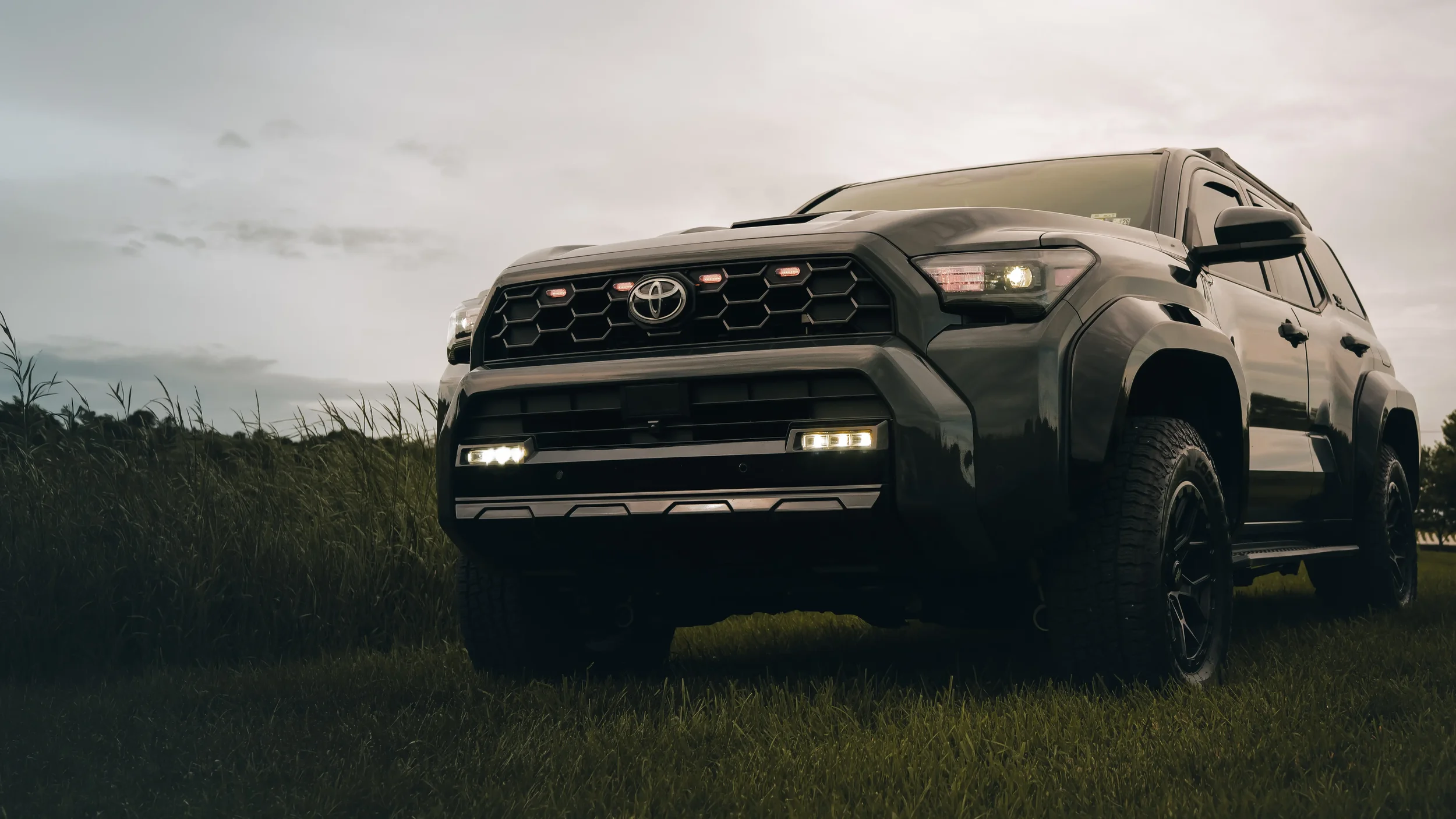
The sixth-generation Toyota 4Runner is on the road in real numbers now, which means owners are finding the noises, quirks and first-year issues that never appear on a specification sheet. I own a 2025 4Runner TRD Sport, so I have a direct reason to follow this.
This page is a living reference for 2025 and 2026 Toyota 4Runner problems. It is not an argument that the truck is unreliable. A forum complaint is not a defect, and a Technical Service Bulletin is not a recall. Separating those three things is the entire point.
Documented by Toyota: front brake squeal while reversing, covered by a service bulletin that has since been superseded.
Owner-reported, not Toyota-diagnosed: low-speed transmission clunks and harsh shifts, interior rattles, infotainment quirks, 4WD transition noises.
My full build and ownership log lives on my 2025 4Runner TRD Sport build page. I also use the truck as a working platform for automotive parts and accessory product photography, which is part of why I document fit, condition and issues in as much detail as I do.
Front brake squeal in reverse
This is the clearest documented sixth-generation issue, because Toyota published service information for it covering 2025 and 2026 4Runner and 4Runner Hybrid models. The original bulletin has since been made obsolete in favour of a newer one, which is why an owner quoting an old number at a service counter can create confusion rather than clarity.
I keep the repair detail, the bulletin history and the exact language to use with a dealer out of this hub so the two pages do not compete for the same search. The full breakdown is in my dedicated brake squeal article.
Transmission clunks and harsh shifting
Owners across the sixth-generation communities report low-speed clunks, delayed or abrupt engagement, and occasional behavior described as slip followed by a hard catch. I treat all of that as owner reporting unless Toyota publishes a specific diagnosis or repair procedure.
The useful first move is not a diagnosis. It is documenting the exact operating conditions, because a modern adaptive transmission behaves differently cold, warm, in different drive modes and under different throttle inputs. My full documentation method and what I would escalate is in the transmission article.
Brake noise does not automatically mean brake failure
Obvious, until you read forums for an hour.
A squeal can be irritating without indicating any loss of braking capability. The opposite is also true. Any change involving pedal feel, warning lights, vibration, pulling under braking or stopping distance deserves an immediate professional inspection and is not something to research your way through.
The documented reverse-squeal condition is specific. If your symptom does not match it, do not assume the bulletin explains it.
Interior rattles and first-year fit and finish
Rattles are the hardest category to catalog, because the cause is frequently not the vehicle. An object in the console, a seatbelt touching trim, an accessory installed slightly proud, or a genuinely loose component all produce the same complaint.
Before a dealer visit, empty the storage areas and remove loose accessories. Then work out if the noise changes with temperature, road surface, passenger load or pressure on a specific panel.
Then record it. A twenty-second phone video showing the sound and the conditions that trigger it does more at a service counter than any description.
Infotainment and electronic quirks
The sixth generation carries a far more technology-heavy cabin than the fifth, particularly on trims with the larger multimedia display and connected services. That produces a category of complaints that may be software rather than hardware.
If the display, camera, phone connection or a connected feature behaves inconsistently, document the software version and the exact sequence that reproduces it before assuming a component has failed. Check for an applicable software update or service bulletin first.
4WD transition noises need context
Some owners report a clunk when changing four-wheel-drive modes. Driveline load, steering angle, speed, surface and if the vehicle is coasting all affect what you feel during a transition.
Follow the procedure in the owner manual for your specific drivetrain. If the sound is severe, repeatable, or accompanied by difficulty engaging or disengaging a mode, have it inspected rather than relying on another owner's experience.
TSB and recall are not the same thing
This is the single most useful thing an owner can understand.
A recall generally addresses a safety-related defect or a regulatory noncompliance and carries a formal remedy process. A Technical Service Bulletin is information Toyota provides to technicians about diagnosing or repairing a known condition. A TSB does not mean every vehicle is affected, and it does not guarantee a free repair outside applicable warranty coverage.
When researching any bulletin, get six things:
- the exact bulletin number
- the current revision
- affected model years and configurations
- the symptom as Toyota describes it
- the warranty conditions
- if the bulletin has been superseded
How I document a problem before visiting Toyota
Once is a note. Twice is a log.
For anything repeatable, record date, mileage, weather, vehicle temperature and the exact conditions. Capture video or audio when it is safe to do so. Then ask that the concern be written on the repair order even if the dealership cannot reproduce it that day.
That paper trail is what matters if the issue develops over the next two years.
What I keep in the truck for documentation and ownership
Useful for reading stored codes and live data so you arrive with information instead of an adjective. It does not replace dealer diagnosis and it will not tell you if a shift is within specification, but knowing if anything is stored is worth the trip.
The reason I mention a dash cam in a problems article is documentation. If a symptom happens once a week at an unpredictable moment, a camera already running is the only thing that reliably captures it with speed and conditions attached.
General ownership gear rather than diagnosis. Worth having in any vehicle that spends time away from a parking lot.
If you air down for trails or just want to correct pressures on a road trip without hunting for a working station, this lives in the back of mine.
For wheel and fitment work. Not for brake repair advice, which belongs with a technician following the current Toyota procedure.
So is the 2025 4Runner unreliable?
It is too early to answer that from scattered complaints, and anybody telling you otherwise about a two-model-year-old redesign is guessing.
The sixth generation brought a new powertrain, new electronics, chassis changes and a much larger owner base. That always generates volume. With enough vehicles on the road, the answer to "does anybody have a problem" is always yes.
Better questions: is the same problem repeating, has Toyota acknowledged it, is there a bulletin or a recall, is there a repeatable repair, and does the issue affect safety or only refinement. Those are the standards I use when updating this page.
More sixth-generation 4Runner coverage
My 2025 TRD Sport build tracks the OEM-plus direction I am taking this truck. My first drive and full specifications covers the powertrain numbers. The RockTrix wheels and Kuat Piston Pro X writeups cover the parts I have actually run, and my Tacoma is the truck this one replaced.
Update log
August 19, 2026: initial publication. Covers documented reverse brake squeal service information and current owner-reported issues.
Next update: when Toyota publishes new sixth-generation service information or a recall, or when my own truck develops something worth recording.
Automotive Photography / Pittsburgh and Western PA
I photograph trucks and the parts that go on them
Shops, dealers, builders and aftermarket brands. Vehicle photography on location and product photography for parts and accessories, shot by somebody who actually builds and drives them.
Start a ProjectFAQ
What are the most common 2025 to 2026 Toyota 4Runner problems?
The most repeated owner topics are front brake squeal in reverse, low-speed transmission clunks and harsh shifts from the 8-speed automatic, interior rattles, and infotainment quirks. Toyota has published service information covering the reverse brake squeal. The transmission reports remain owner reports.
Is the 2025 Toyota 4Runner reliable?
It is too early to make a long-term reliability judgment on a first and second model year of a new generation. The useful test is not if somebody online has a problem. It is if the same problem repeats, if Toyota has acknowledged it, and if there is a documented repair.
Is a TSB the same thing as a recall?
No. A recall generally addresses a safety defect or a regulatory noncompliance and follows a formal remedy process. A Technical Service Bulletin is guidance Toyota gives technicians about diagnosing or repairing a known condition. A TSB does not mean every vehicle is affected.
How do I get a dealer to take an intermittent 4Runner problem seriously?
Bring a log. Record date, mileage, outside temperature, if the vehicle was cold or warm, speed, drive mode, throttle input and if the symptom repeated. Ask for the concern to be written on the repair order even if the technician cannot reproduce it that day.
Does the 2025 4Runner have a transmission recall?
As of August 2026 I am not aware of a recall covering the low-speed shift behavior owners describe. Some owners have reported significant transmission repairs, but individual repairs and a recall are different things. Check your VIN against current recall information directly.
Where can I check current recalls for my 4Runner?
Run your VIN through the NHTSA recall lookup and confirm with a Toyota dealer. Both sources reflect current status, which a forum screenshot from last year does not.
I am Ian Jones. I shoot automotive photography in Pittsburgh and automotive product photography for aftermarket brands nationwide, and I daily drive the truck in these photos. See the gear I use or start a project.
Sources: Toyota technical service bulletin information for sixth-generation 4Runner front brake squeal and its superseding bulletin. NHTSA published manufacturer communication and complaint records. 4Runner6G and sixth-generation owner community discussions on transmission behavior, brake noise, rattles and 4WD transitions. Verify current service information and recall status by VIN with a Toyota dealer before acting on anything here.